Running a Direct to Consumer brand on Amazon as a third party (3P) seller can feel like the ultimate growth engine. Founders gain instant access to millions of customers, powerful fulfillment infrastructure, and the ability to scale revenue faster than most traditional retail channels. For many brands, the marketplace quickly becomes their largest sales driver.
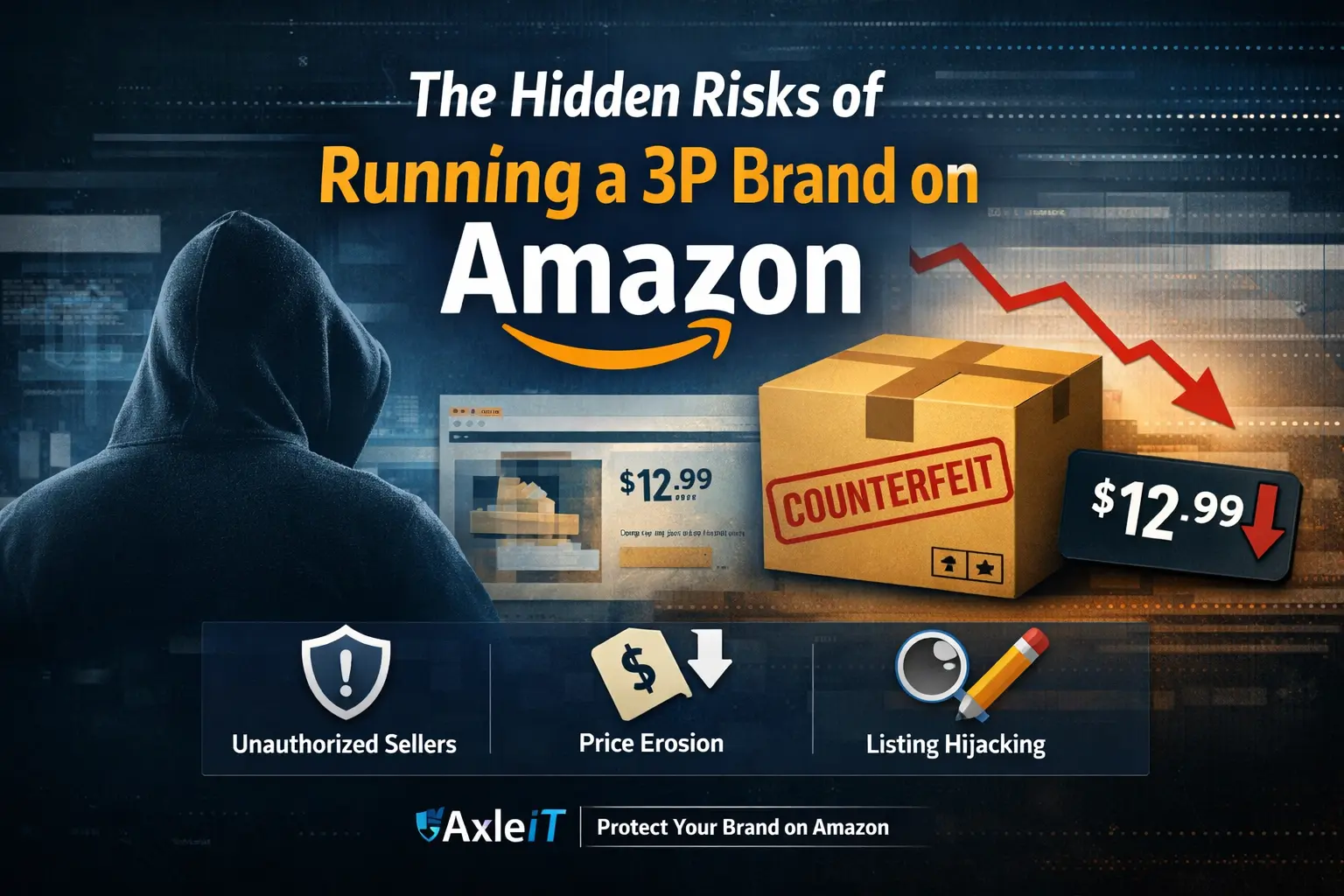
But beneath this opportunity lies a set of risks that many founders do not fully recognize until they begin affecting revenue, brand reputation, and control. From unauthorized sellers and price erosion to listing hijackers and counterfeit products, operating as a 3P brand means participating in a marketplace where you do not always control who sells your products or how they are represented.
These challenges often develop quietly. A single unauthorized seller can trigger price drops, erode margins, and weaken a brand’s perceived value. Listing changes or counterfeit products can damage customer trust and create long term brand issues that are difficult to reverse.
In this article, we will explore the hidden risks of running a 3P brand on Amazon and what founders can do to protect their pricing, listings, and brand integrity while continuing to grow on the platform.
The Illusion of Control for 3P Brands on Amazon
Many founders believe that selling as a third party on Amazon means they control their brand’s presence on the marketplace. After all, they created the listings, launched the products, and manage the advertising. But the reality of the marketplace is very different. Once a product is live and successful, other sellers can quickly enter the listing and begin selling the same product.
This creates a common situation where founders discover that multiple sellers are suddenly competing on their own listings. These sellers may have sourced inventory through distributors, liquidation channels, or even gray markets. Because Amazon allows multiple sellers to share a listing, brand owners often have limited control over who sells their product unless strong brand protection strategies are in place.
The consequences can be serious. Multiple sellers can drive aggressive price competition, damage brand perception, and create inconsistent customer experiences. If one seller provides poor service or ships damaged products, customers will still associate the negative experience with the brand itself.
To maintain control, founders need visibility into who is selling their products across the marketplace. This is where platforms like AxleIT help. By monitoring listings, identifying new sellers, and flagging unauthorized activity, brands can quickly detect threats before they impact revenue or reputation.
Understanding that Amazon is an open marketplace rather than a controlled storefront is the first step founders must take when protecting a 3P brand.
Unauthorized Sellers and the Price Erosion Problem
One of the biggest challenges for 3P brands on Amazon is the rise of unauthorized sellers. These sellers often appear once a product begins generating strong demand and ranking well in search results. Their goal is simple: capture a share of the sales volume by undercutting the brand’s pricing.
Over time, this leads to a destructive cycle of price erosion. When one seller lowers the price, others follow to remain competitive and win the Buy Box. Eventually, the product’s market price can drop well below the brand’s intended pricing strategy.
For founders, this creates multiple problems. Lower prices shrink profit margins, disrupt relationships with authorized retailers, and weaken the perceived value of the brand. Premium brands in particular can suffer long term damage if their products consistently appear discounted.
Monitoring pricing across listings is essential for preventing this issue. Many brands implement Minimum Advertised Price policies, but enforcing them across a large marketplace can be difficult without proper tools.
Solutions like AxleIT allow brands to track MAP violations, detect unauthorized sellers, and gather evidence needed to enforce pricing policies. Instead of discovering problems weeks after they begin, founders can receive alerts when pricing drops or new sellers appear.
Without proactive monitoring, price erosion can quietly drain profitability from even the fastest growing Amazon brands.
Listing Hijacking and Brand Reputation Risks
Another hidden risk of operating a 3P brand on Amazon is listing hijacking. This occurs when third party sellers attach themselves to an existing product listing and begin selling products under the same listing page.
In some cases, these sellers may be offering genuine products sourced through secondary channels. In other situations, they may be selling counterfeit or low quality alternatives. Either scenario can create serious brand risks.
Customers rarely differentiate between sellers when evaluating a product page. If a counterfeit or poor quality item reaches a customer, the negative reviews will appear on the listing itself, affecting all sellers including the brand owner. Over time, this can damage product ratings, reduce conversion rates, and hurt organic search performance.
Hijackers can also modify listing content, images, or product details, which may misrepresent the brand or create confusion for customers.
To combat this, founders need systems that constantly monitor listing activity and seller changes. Platforms like AxleIT help brands detect hijackers early and take action before significant damage occurs. By identifying suspicious sellers and tracking listing changes, brands can protect both their reputation and their product rankings.
Protecting listings is no longer optional for brands that rely heavily on Amazon for revenue.
The Hidden Impact of Marketplace Intelligence Gaps
Many founders operate their Amazon business with limited visibility into what is actually happening across the marketplace. They focus heavily on advertising, product launches, and inventory management, but overlook the broader ecosystem of sellers, pricing dynamics, and competitive threats.
Without real time marketplace intelligence, problems often go unnoticed until they become severe. Unauthorized sellers may have been active for months. Prices may have gradually dropped across multiple listings. Competitors may be analyzing and targeting the brand’s best selling products.
This lack of visibility creates strategic blind spots. Founders cannot effectively enforce pricing policies, identify distribution leaks, or respond to emerging threats without reliable data.
Modern Amazon brand management requires continuous monitoring of seller activity, price movements, and listing integrity. Technology platforms like AxleIT provide brands with the data needed to understand what is happening across their listings.
With the right intelligence, founders can identify patterns such as recurring unauthorized sellers, consistent MAP violations, or geographic sources of gray market inventory. These insights allow brands to take targeted action instead of reacting after damage has already occurred.
Marketplace intelligence has become a critical component of protecting brand value on Amazon.
Building a Long Term Protection Strategy for 3P Brands
Founders who succeed on Amazon rarely rely on reactive approaches to brand protection. Instead, they build structured strategies that combine policy enforcement, technology, and ongoing monitoring.
A strong protection strategy begins with clear distribution policies. Brands must understand where their products are being sold and ensure partners follow agreed pricing and sales guidelines. Without this foundation, unauthorized sellers can easily gain access to inventory.
The next step is implementing continuous monitoring. Tracking seller activity, pricing changes, and listing updates allows brands to detect issues quickly. Early detection dramatically reduces the time and effort required to resolve marketplace threats.
Automation also plays a key role. Tools like AxleIT help streamline seller monitoring, MAP enforcement, and unauthorized seller detection. Instead of manually checking listings, founders can rely on automated alerts and reporting systems.
Finally, brands should establish a clear enforcement process. When violations occur, the response must be consistent and documented. This ensures that sellers understand the brand is actively protecting its marketplace presence.
Amazon remains one of the most powerful growth channels available to Direct to Consumer brands. But long term success requires more than strong sales performance. It requires protecting pricing, maintaining listing integrity, and ensuring that the brand experience remains consistent for customers.
With the right strategy and tools in place, founders can grow on Amazon while keeping control of their brand.
